
Category: Opinion

  • Grand Mosques and Political Resistance Decentralization

    Historical Context

    In the 16th to 18th century, most major Islamic kingdoms in modern day Indonesia have a grand mosque in their capital city. They were commonly located nearby the Alun-alun, a city square, and in some extent became an inseparable component. Grand mosques became the center of all sorts of public activities. Communal activities such as trades, social interactions, and recreations were an integral part of a grand mosque, not to mention political movement.

    Grand Mosque as a Political Medium

    Theoretically, in political respect, grand mosques serve as a center of circulation of information and propaganda. The absence of smaller mosques forces people to pray and gather in one place and allowing them to develop shared political views. Through religious gatherings and sermons, local Muslim authorities are able to conspire and propagate ideas of subversive movements to the public against the ruling authorities.

    The “Decentralization”

    Ruling authorities, with a tendency of Islamophobia, tend to encourage decentralization among Muslim communities in order to suppress a possibility of conspiracy. For example, the number of mosques in Indonesia has been growing rapidly in the last 15 years. Regardless of the causes behind the increase in mosque construction, a larger number of neighborhood mosques disperses congregational gatherings that were once concentrated in fewer locations. This spatial decentralization may reduce the role of any single grand mosque as a focal point for political mobilization.

    Conclusion

    Throughout Indonesian history, the grand mosque was more than a religious institution. It also functioned as an important social and political space where information, authority, and collective identity converged. As religious infrastructure becomes increasingly decentralized, the political significance of any single mosque may likewise diminish. While this phenomenon should not be interpreted as evidence of a deliberate state policy, it suggests that the spatial organization of religious institutions can influence patterns of communication, collective action, and political mobilization.
  • Beauty standard, Patriarchy and Capitalism

    A strong reason why women should start learning about themselves. It’s more than just about the market.


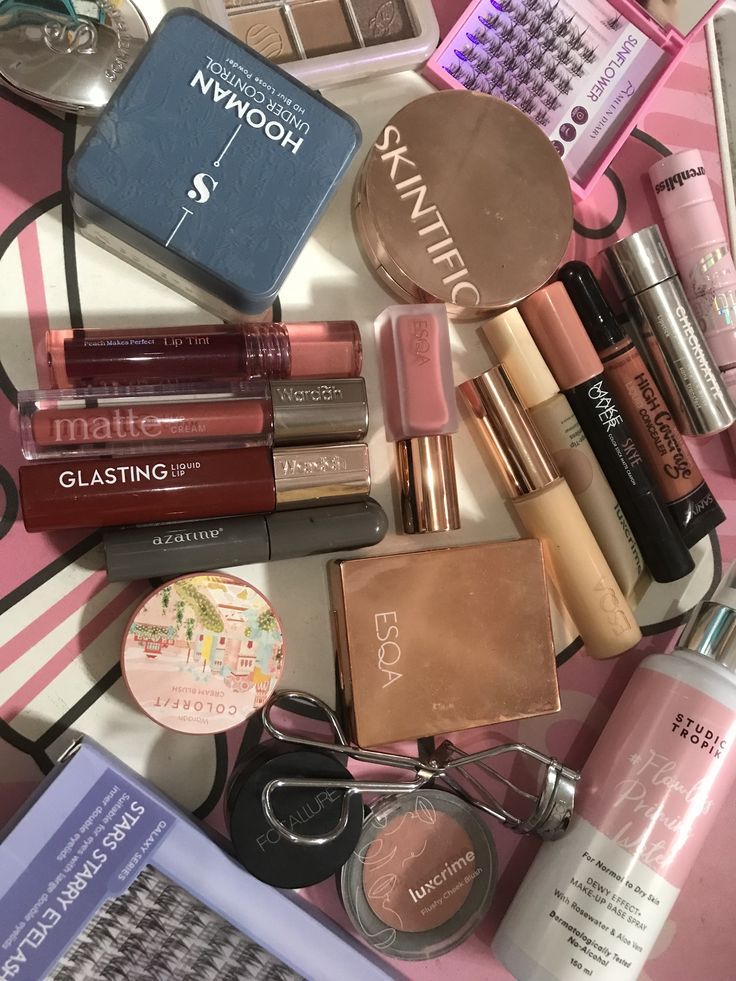
    You see those white-skinned, high-bridged noses and perfect teeth in TikTok videos and start comparing yourself to them, even wishing that you had a “perfect” body like theirs or, at least, that kind of beauty. Then, you start searching for products that could make you feel “beautiful” just like them: skincare products, makeup, and fashion items, and you check them out immediately. Will it end there? No. It’s a loop—a never-ending cycle.

    Let me identify what beauty standards actually are. They are a set of “ideal” yet illogical standards that society expects women to meet. These standards are constantly shown through films, social media, magazine covers, and advertisements.

    I am not saying that taking care of your physical appearance is bad, but it’s about how well you understand what you’re doing and why you’re doing it. Nowadays, being a woman is quite tough. The internet keeps showing us what an “ideal” and “perfect” appearance should look like and how you can achieve it with certain products.

    The question is, why? Why does the media keep showing these unrealistic ideals? Why does the media keep projecting that being “beautiful” means being worthy?

    To be honest, I couldn’t think that clearly about this, but I think it’s more than just the market. It’s more than simply “keeping the market alive.” It becomes a form of control—a control without being physically imposed. Unfortunately, society contributes to this control as well. Men keep women focused only on their appearance. They limit women’s potential by creating such standards.

    And what exactly happens when we don’t fit into these beauty standards? Internally, women start to feel anxious or even depressed because they are constantly told how they should look. externally, society sometimes would treat them “differently” even treat them “unfair” in certain level. 

    How many times, you meet people with such beauty standard being treated more kind and respect,rather than the one who actually “not fit into beauty standard” ?

    On top of that, many beauty campaigns in the skincare industry focus on anti-acne products or reducing dead skin. “Bye-Bye Acne!” or “Look perfectly young at the age of 30,” or “Get rid of dull skin,” while the posters they show often feature a woman with a bronzed complexion who is transformed into someone with white skin.

    They make normal things such as wrinkles and acne seem like something’s wrong with you, when, in fact, they are completely normal parts of being human.

    The media opens the door to keep repeating these ideas and makes everyone constantly feeling insecure about themselves, feeling like they are never enough. By the end of the day, they sell products to supposedly make “women feel better.” Sadly, women won’t have enough mental space to think about their potential or the things they are actually capable of doing, because the media and society forced us to keep thingking about “how to be beautiful”. 

    So, as women, it is really important for us to be knowledgeable and aware of what is happening around us. What if we don’t? Then it slowly starts becoming a form of control over women. Men will keep your focus only on your physical appearance. They won’t let you become fully confident or think about your potential because they don’t want you to. They’ll have complete control over your focus.

    That’s why it is really important to have a good awareness of what is happening around us.

  • Forgotten Traditions of Resistance: Islamic History and the Challenge of Modern Passivity

    Islamic history has long been recognized as a rich source of ethical, theological, and philosophical insights that have shaped generations of thought and practice. While scholarship often emphasizes dimensions such as jurisprudence, spirituality, and intellectual tradition, one crucial aspect tends to receive comparatively less attention in contemporary discourse: the concept of political resistance.

    In the present context, it may be argued that segments of the Muslim community exhibit a diminished responsiveness to systemic oppression. The influence of global capitalism, with its emphasis on individual productivity and material pursuits, arguably contributes to a depoliticization of collective consciousness. As a result, historical precedents of resistance are often underexamined or insufficiently integrated into modern ethical frameworks.

    Historical examples, however, demonstrate that resistance has been a recurring and significant element within Islamic societies. One illustrative case is the resistance of the Moriscos in early modern Spain. Following the fall of Muslim rule in the Iberian Peninsula, these forcibly converted Muslims were subjected to systematic repression under the Spanish Crown. Policies included compulsory conversion to Christianity, prohibition of the Arabic language, and the suppression of Islamic cultural practices. In response, segments of the Morisco population organized a rebellion under the leadership of Fernando de Válor, also known as Aben Humeya. Although ultimately unsuccessful, this uprising represents a significant instance of resistance against religious and cultural coercion.

    Similar examples also occurred in the contemporary period. Following the breakup of Yugoslavia in the 90’s, a group of Bosnian Jihadist was formed to contain genocide from the Serbs and Croats. Although resulted in a huge population loss, the resistance enticed international Muslim solidarity and became a symbol of Islamic resistance in the modern times.

    At a more foundational level, the mission of Prophet Muhammad can also be interpreted through the lens of political resistance. His early struggle in Mecca was not solely a theological endeavor but also a challenge to the entrenched socio-political order of the Quraysh elite, whose authority was closely tied to economic control and tribal hierarchy. The emergence of Islam thus entailed both spiritual transformation and a reconfiguration of power relations, positioning it as a form of resistance to systemic injustice.

    Fast-forward to today’s context, oppression has transformed into a more subtle, non-coercive and unrecognizable form. This transformation diminish collective consciousness among the people. Thus, political resistance discourse needs to reach the unconscious minds. Besides religious teachings, lectures about Islamic political resistance are also necessary to be echoed in Muslim communal gatherings and media.

    In conclusion, the historical record suggests that political resistance constitutes an integral dimension of Islamic tradition. Re-engaging with this aspect may offer a more comprehensive understanding of Islamic ethics, particularly in addressing contemporary forms of oppression and inequality.

  • Would the world be better if there were no beauty privilege?

    Is it true because of the beauty or the desire to be seen?


    I often hear that beauty can solve at least 50% of your problems. Once you have beauty that fits social standards, it means you are easier to listen to, easier to notice, and easier to get new opportunities. Even to fulfill basic human needs, we still need to cover our faces with makeup just to be seen and heard.

    When I was young, I never thought that being labeled “ugly” or “unpretty” would be a big deal. I thought I would still have my books and my drawings. I thought people out there would be kind and pure at heart. People would eventually be heard, because that’s the function and reason why we have ears and hearts.

    And then there’s a question: would life be better when there’s no beauty privilege? Would I shut my mouth if I had at least one criterion from society’s beauty standards? Bright to white skin, a pointed nose, straight teeth, clear skin. I have none. Would the “uglies” have their own opportunity to at least survive in this world?

    I keep repeating the question: would the world be better when there’s no beauty privilege? I guess yes. But there would be another comparison. It might not be beauty, maybe something else that can be seen. Maybe it’s about how big your eyes are, or maybe about how smart you are. The numbers would be crazy. Everything would be counted in numbers, because there’s nothing to compare before we test it out, since they are unseen.

    Maybe it’s not about “beauty privilege,” but actually about arrogance. Human nature. The need to be seen and to feel better than others. The bias. I think even when beauty privilege does not exist, humans will eventually create another hierarchy.